
Googling a healthy snack? On the algorithm for refined-sugar free recipes? Asking your most health-conscious friend for diet tips? Dates have probably come up. Full of natural sweetness, perfect for a grab-and-go snack, and incorporable in a whole host of bake and no-bake recipes, it’s no wonder they’re all the rage. But are they actually as good for you as everyone says? We’re here to break it down, delving into the date trend to see if it’s worth your attention.

A quick date rundown
There are more types of dates than any of us thought, probably. In fact, there are over 200 different varieties. Lock that fun fact in for your next pub quiz. Despite this huge number of types, though, dates can generally be separated into two snacking categories: soft and semi-dry.
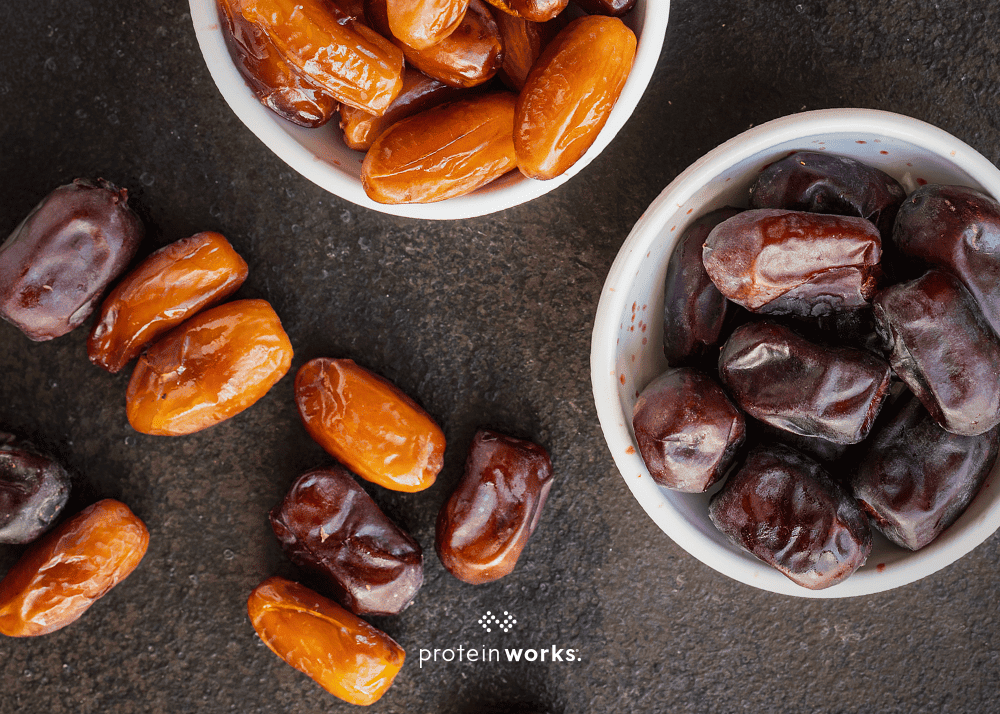
Your soft dates are the juicy, syrupy ones like medjool or barhi dates. Medjool are the ones you’re most likely to see while shopping, and they’re delicious.
Semi-dry dates are a little firmer and lighter, like the deglet noor date. These are better for baking, stuffing, or chopping for salads.
The nutritional profile of both types is broadly similar, so the main difference for you is which texture and taste you prefer. We don’t think you can go too far wrong.
What are the health benefits of dates?
Now we’re over the formalities, let’s get into what dates can add to your diet.
They’re high in fibre
Meeting your fibre goals is extremely important for your health, helping you stay full, lowering your cholesterol, and keeping your digestive system running smoothly. And in one serving of dates (usually around 4), you get 7g of fibre – this is around 30% of the daily recommended amount.
They give you a hit of energy
Dates are high in sugar, that’s no secret. But their high fibre content helps to counteract blood sugar spikes, giving you the quick energy sugar is known for, without the crash afterwards. In a serving of dates, you’re getting about 16 grams of sugar. It’s a fair amount, but if you need a quick boost, dates are better than other fibre-less sugar sources.
They contain a little protein
Ok, ok, we don’t want to claim that dates can help you reach your 150g a day protein goals; in reality, they only have about 2g of protein per serving. So they’re not going to be a direct replacement for your protein powder. However, this does give them a little edge over other sweet alternatives. So, if you want to make sure all your foods are functional on some level – including sweet treats – dates are a pretty good choice.
They provide important electrolytes
Potassium and magnesium are two important minerals that function as electrolytes in our bodies, maintaining a good amount of sodium and fluids – and one date serving contains about 15% of your recommended daily amount!
They’re rich in copper
Potassium and magnesium aren’t the only minerals you’re getting from dates – they also pack a punch when it comes to copper. A single serving gives you around 40% of your daily recommended amount of copper, a mineral involved in red blood cell and collagen production in your body.
Date in moderation
These health benefits are all enticing – but don’t overload on dates thinking they’ll solve all your ailments. They are still naturally high in sugar: unrefined sugar, but sugar all the same. This means that dates are better to enjoy as a swap for your usual sweet treat, rather than an unlimited snacking hack.
How to enjoy your dates
Soft dates are delicious straight out the package; no preparation needed. Many even come pitted and diced for an even more convenient treat. However, if you want to be a little more adventurous, here are some ideas:
- Blend them into a smoothie or protein shake to add sweetness
- Chop and roll up with nuts, oats and nut butter for homemade energy balls
- Slice, fill with peanut butter, and drizzle with melted dark chocolate
- Chop up and toss into salads, porridge, or yoghurt bowls
- Use as a natural sweetener in baking by blending them up (1:1 sugar replacement)
Get creative with it! Dates are extremely versatile, and there are endless recipes online incorporating them into all sorts of delicious treats.
Time to start dating
Dates are a genuinely useful natural sweetener and snack, one that gives you health benefits while being simultaneously delicious in all its forms. However, make sure you enjoy them in moderation as part of a balanced diet for the best wellness results.


References
Are Dates Actually That Good for You? | TIME