
Collagen is one of the most searched supplements in the UK – and one of the most confusing categories to shop in. Gel sachets, powders, coffees, capsules. Prices ranging from a few pounds to premium territory. Claims ranging from honest general wellness framing to over-stretched outcome promises the evidence doesn’t support. So lets dig into the best collagen supplements in 2026:
What is collagen?
Collagen is the most abundant protein in the human body. It’s a structural protein – a key component of skin, bones, tendons, ligaments, cartilage, and the gut lining. From your mid-20s, your body’s natural collagen production starts to decline, and factors like sun exposure and diet quality can speed that up.
What are the different types of collagen?
Three types are relevant for supplementation:
- Type 1 – the most abundant type in the body, found in skin, bones and tendons. It’s the primary type in most supplements; both marine and bovine sources deliver it.
- Type 2 –found mainly in cartilage, associated with joint health.
- Type 3 – found alongside Type 1, particularly in skin and blood vessels. Bovine sources typically deliver Type 1 and Type 3 together.
Marine vs bovine collagen: what’s the difference?
Marine Collagen
Source: Fish skin and scales
Type delivered: Type 1
Bioavailability: Widely considered highly bioavailable in hydrolysed form
Best for: Simplicity, Type 1 focus
Bovine Collagen
Source: Cattle
Type delivered: Type 1 + Type 3
Bioavailability: Good, broader tissue coverage
Best for: Broader collagen coverage
Worth knowing before you shop: there’s no such thing as plant-derived collagen. Products marketed as ‘vegan collagen’ typically contain nutrients that support your body’s own collagen production – most commonly Vitamin C, which contributes to normal collagen formation for the normal function of skin, bones and cartilage.
Why does hydrolysis matter?
Raw collagen is a large, complex molecule – too large for your body to absorb efficiently through the intestinal wall in meaningful amounts. Hydrolysis breaks it down into smaller peptide fragments using water and enzymes. Those smaller peptides are absorbed into the bloodstream far more effectively.
If a label says ‘hydrolysed collagen peptides,’ that’s the form you want. If it just says ‘collagen’ with no mention of hydrolysis or peptides, look closer.
Should i Take Vitamin C with collagen?
Yes. Vitamin C contributes to normal collagen formation for the normal function of skin, bones, cartilage and other tissues. A collagen product without it is a missed opportunity/
How much collagen should I take per day?
Research into collagen supplementation typically uses doses of 5–10g per day for powders and capsules. Check the milligrams stated per serving, not just the fact that it ‘has a serving.’
What format should I choose?
Collagen rewards daily consistency more than almost any other variable. The best format is the one you’ll actually use every day – a no-prep gel sachet, a powder that mixes into water, a capsule, or collagen built into your morning coffee.
Collagen label checklist
- Hydrolysed collagen peptides, not raw collagen – the single most important check
- Type and source clearly stated (Type 1 marine / Type 1+3 bovine)
- Dose – 5–10g/day range, checked in milligrams
- Added Vitamin C where possible
- A format that fits your routine
What to avoid when buying collagen
- Non-hydrolysed collagen. The bioavailability difference is substantial.
- Unspecified type or source. If you don’t know what you’re buying, you can’t compare it fairly.
- Underdosed products. 500mg per serving isn’t the same category as several grams. Check the number.
- Unapproved claims. Claims that collagen eliminates wrinkles or regenerates cartilage aren’t EFSA-approved. The honest position: collagen supplementation provides a bioavailable source of key amino acids, and – with Vitamin C included – supports your body’s own collagen formation process.
How Protein Works approaches collagen
Type/Source: Type 1 marine, hydrolysed
Format: Gel sachet
8,000mg collagen, 80mg Vitamin C (100% NRV), 50mg Hyaluronic Acid
Type/Source: Type 1 + 3
Format: Powder
5 flavours incl. unflavoured
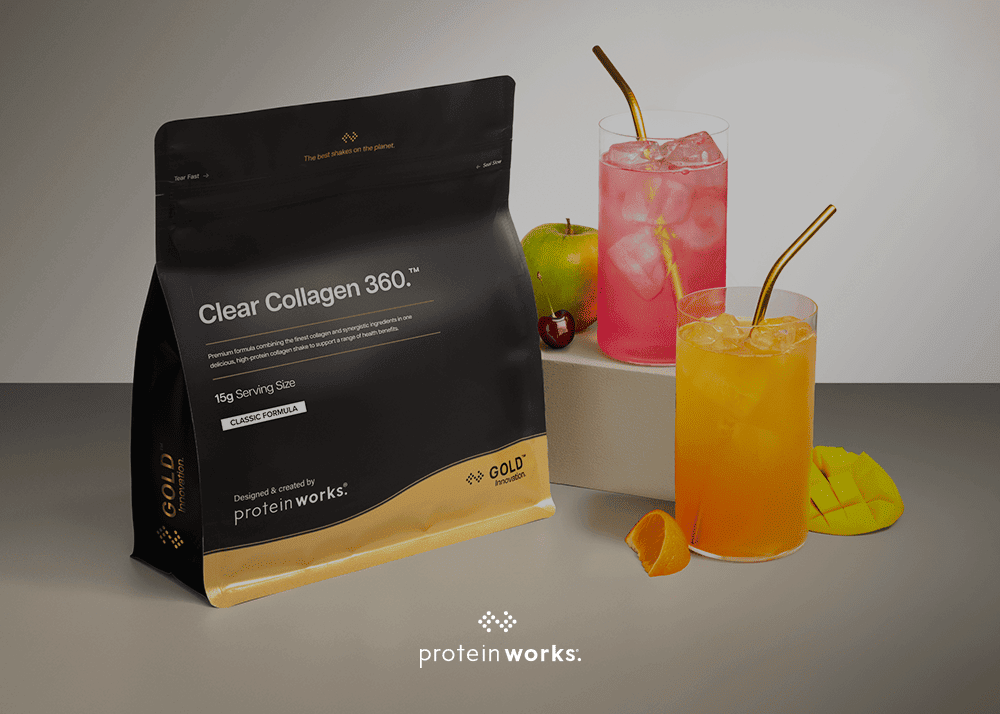
Collagen Protein Coffee – GOLD
Type/Source: Collagen peptides + Vitamin C
Format: Coffee
Brazilian coffee base
Type/Source: Type 1 marine
Format: Capsule
No mixing or prep
Type/Source: Whey + collagen peptides
Format: Shake
Consolidates protein and collagen
FAQs
Is marine or bovine collagen better?
Neither is universally ‘better’ – marine delivers Type 1 only and is widely considered highly bioavailable; bovine delivers Type 1 and Type 3 together for broader coverage. The choice depends on your goal.
How much collagen should I take per day?
Research typically uses 5–10g per day for powders and capsules – and the best collagen supplements do too. Check the milligrams stated on the label.
What’s the difference between collagen and hydrolysed collagen peptides?
Raw collagen molecules are too large for the body to absorb efficiently. Hydrolysis breaks collagen into smaller peptide fragments that are absorbed into the bloodstream far more effectively.
Is there such a thing as vegan collagen?
No – collagen is an animal-derived protein. ‘Vegan collagen’ products typically contain nutrients like Vitamin C that support the body’s own collagen production, rather than containing collagen itself.
Does collagen get rid of wrinkles?
No EFSA-approved claim supports this. The evidence-backed position is that collagen supplementation provides a bioavailable source of key amino acids and, with Vitamin C, supports the body’s own collagen formation process.
The bottom line
So what makes the best collagen supplements in 2026? Hydrolysed peptides. A meaningful dose. Vitamin C included. Type and source clearly stated. A format you’ll actually stick to. Get those five things right and you’ve got a collagen supplement worth buying.