The UK’s Most Popular Meal Deals Ranked on Nutritional Quality and Value

Busy schedules and growing workloads are consuming more of UK workers’ time and attention, making convenient grab-and-go lunches an everyday staple for millions. Offering variety, convenience, and relative affordability, supermarkets have become a go-to, especially for younger generations (1).
Studies suggest workers spend an average of £15 to £20 per week on lunch, making a meal deal appear to be a cost-effective choice (1). However, their nutritional value per pound often doesn’t hold up (1)
As modern lifestyles are unlikely to change, the market is beginning to adapt to these lunchtime habits, and nutritionist Kyle Crowley insists that small differences in eating habits have a compounding impact on health and well-being:
“A quick and affordable meal is not by definition nutritionally poor. But satiety, lasting energy levels, and focus can all be improved through better eating habits and choices, and luckily, smarter and cost-effective nutrition is becoming more readily available.”
To help measure the impact Britain’s lunches might be having on their wellbeing and productivity, Protein Works analysed the nation’s most popular meal deal choices across five supermarkets against nutritional guidelines set by the NHS and WHO, with the added metric of price for nutritional value. This new analysis reveals whether Britain’s most popular lunches are nutritionally balanced and cost-effective or are contributing to our 3 PM slumps.

The UK’s favourite lunch choices contribute to 108% of our daily sugar intake and only have 6g of protein per pound spent
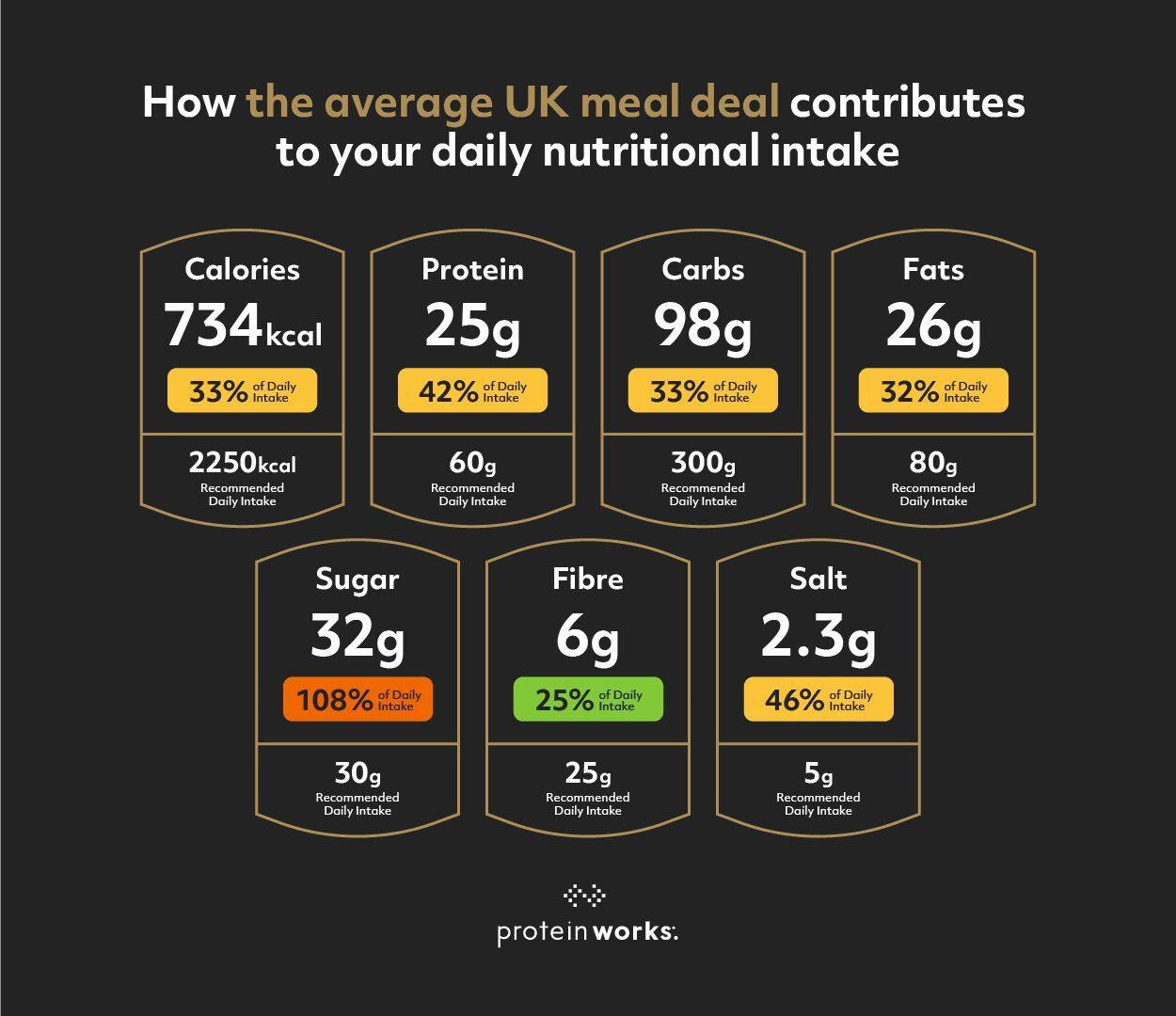
An analysis of the UK’s most popular meal deal offerings revealed a stark nutritional imbalance when comparing their contribution to the daily recommended intake by WHO and the NHS.
Key takeaways from the study include:
- Nutritional value per £: the average meal deal offers 6 grams of protein per £ spent, 30% less than Savoury SuperMeals
- Meal deals provide 108% of the recommended daily sugar intake: the average popular meal deal combination contains 32 grams of sugar, which is 108% of the daily recommended amount (30g).
- Meal deals contribute to nearly half of your daily salt intake: the average popular meal deal contains 2.3 g of salt, making up 46% of your daily intake.
- Less protein than sugar: the average popular meal deal contains more sugar (32g) than protein (25g), a key indicator of unbalanced nutrition.
- High caloric density: With 28.92 kcal per gram of protein, the average meal deal’s caloric density relative to its protein content is very high.
On average, Brits’ most popular supermarket meal deals offer a less-than-ideal nutritional profile, with a sugar intake that exceeds their daily recommended intake and a similarly alarming calorie density. Some meal deals contained nearly 1,000 calories in one meal, with prices ranging from £3.74 to £5, completely independent of nutritional value. While consumers cannot be faulted for seeking convenience, the ample choices available should make it possible to improve on the nutritional value of a quick, convenient and cost-effective lunch.

The average meal deal can give a broad indication of nutritional content, but there is more to know about how the most popular meal choices compare to each other. Analysing the data in more detail, Protein Works have looked into the UK’s most popular meal deal combinations from five different supermarkets and established a ranking of the most nutritionally balanced, focusing on meal deals that provide higher protein and lower sugar relative to the number of calories consumed and the price paid.
The UK’s most popular meal deals ranked on nutritional quality and value
To rank the UK’s most popular meal deals, the analysis measures nutritional value per calorie while also considering price. Many of the options contained sugary drinks and crisps, which brings the overall nutritional value down, as they contain less protein for more money spent.
It’s important to note that while this analysis focuses on identifying which of the most popular combinations are the most nutritionally balanced, it’s worth enjoying these items in moderation and, where possible, opting for more functional snack and drink alternatives.

The healthiest option, measured by the protein-to-sugar-to-price ratio, is a chicken salad sandwich with salted crisps and a zero-sugar cola. This meal contains more than 1 gram of protein for every gram of fat and sugar combined. At £3.74, it is also among the cheapest options.
On the opposite end of the scale, containing only 0.22 grams of protein per gram of fat and sugar, is a southern-chicken fried wrap with BBQ beef crisps and a full-sugar cola. Interestingly, this meal is also one of the cheaper options at £3.95.
The meals ranked highest strike a balance between being fairly low in calories, whilst still containing at least 20 grams of protein and being low in sugar. This highlights that a healthy lunch option is a careful balance between getting enough of the right nutrients and not getting too much of the wrong ones.
The lack of correlation between price and nutritional value is an added layer of confusion for the average consumer, as price is often assumed to influence quality and value. When it comes to meal deals, this is clearly not the case.
The impact on health and productivity
While many discussions around nutrition focus on aesthetic considerations such as weight loss and muscle building, it’s much more important to be aware of food’s impact on feelings of well-being throughout the day.
A previous Protein Works study on the effects that different breakfasts have on energy levels throughout the day highlighted the importance of protein and the effect of consuming too much sugar.
Kyle Crowley, nutritionist and Chief Product Officer at Protein Works, explains:
“High sugar intake causes a spike in energy that is later followed by a crash, as the body produces more insulin to stabilise blood glucose levels. These ups and downs cause longer periods of low productivity and can leave you feeling sluggish in the afternoon, and hitting that dreaded 3 PM slump.
“Alternatively, meals high in protein provide greater stability during the day. Protein is essential for cognitive function, but it also keeps blood sugar stable. Therefore, it’s important to focus on eating enough protein at lunch to help avoid energy crashes and keep you fuelled throughout your work day.“
How to make smarter choices
- The choice of drink is key to not throwing off the nutritional balance
One key aspect which became evident in the data was that Brits love to indulge in sugary drinks, such as full-fat cola or energy drinks, often hiking the calorie count of a meal up by 200-300 calories, depending on the size of the drink. Considering the protein-per-calorie-per price metric, these drinks throw off the nutritional balance of the meals. Opting for functional drinks like a kombucha, a protein shake or even variations of water are some of the simplest swaps to help create a more functional lunch time meal. - The choice of snack can help boost overall nutritional value
The choice of snack comes secondary to the drink, and is an opportunity to boost nutritional elements such as fibre and protein by opting for an egg pot, fruit or yoghurt. - The choice of a sandwich is the nutritional foundation
The main meal that you chose is the most foundational aspect of your meal. This is where the majority of your nutrients will come from, so it’s important to choose an option that provides a balanced mix of micronutrients.
Kyle Crowley highlights how to choose a healthier lunch:
“The worst-rated meal deals all have a significant element in common: the drink. A full-sugar cola or an energy drink similarly high in sugar seems to be a popular drink option with lunch, even though this choice can have a negative impact on a lunch’s healthiness. These drinks, containing both a lot of sugar and a lot of calories, make a lunch not only less nutritionally valuable, but will cause a sugar crash and a productivity slump.“
“This means that an easy way to improve any given lunch choice is to go for a more functional drink, such as a low-sugar energy drink, or a gentler caffeine source like green tea.“

While meal deals are popular among busy Brits, other lunches have come to market to help meet this gap between convenience and being nutritionally dense.
A great example is our new Savoury SuperMeals, which have been carefully developed to meet the UK’s needs where meal deals fail: ensuring easy nutritional balance in a just-add-water format.
With 24 grams of protein per 350 kcal serving, this easy, healthy lunch provides lasting energy throughout the workday, prioritising a balanced nutrient profile. It also contains 26 vitamins and minerals to support overall health and well-being further. From £2.70 per meal, they are also more affordable and offer significantly greater nutrient density per calorie and per pound spent.
So, next time you’re feeling sluggish and unproductive, maybe question whether your lunch choice may have contributed to your mood and whether you could have made a smarter decision.
To learn more about smarter lunch alternatives, you can find more information on Savoury SuperMeals here.
Start making smarter lunch choices today.
Methodology
To compare the nutritional information of Savoury SuperMeals with the nation’s most famous supermarket lunch, we looked at the most popular and best-rated meal deals from these 5 supermarkets:
- Tesco
- Sainsburys
- Co-op
- Waitrose
- Asda
Tesco published their own data report, which had the most popular meal deals by region, which can be found here. Whereas for the others, we relied on the offerings on their website, which captured all available meal deals and picked the most popular / highest rated products.
We picked 3 regular meal deals and an additional 4th vegan option for balance, as most (though not all) Savoury SuperMeals are plant-based. The vegan option was not picked for Asda due to nothing being available in its most popular data.
Once we had the meals ready, we looked at the nutritional information for each and compared them against a single serving/meal of Protein Works’ SuperMeals. We mapped them vs SuperMeals and measured them against the daily nutritional intake recommendations picked from WHO and NHS.
For the rankings, we looked at the two most vital things people would look for: high protein and low sugar, so we used the nutritional values of each and mapped a score based on the amount of protein and sugar that you consume per kcal of your meal.