
A Complete Guide to Appetite Suppressants (From GLP-1 to Glucomannan)

A boost in celebrity use, increasing prescriptions from GPs, plenty of talk on social media: appetite suppressants are becoming increasingly common, from GLP-1 medications to natural supplements. But whether you’re interested in using them for weight loss or other medical reasons, it’s important to have all the information before jumping in. We’re here to help, with a complete guide covering what appetite suppressants are, how they work, and if they’re safe and effective for your goals.
What is an appetite suppressant?
An appetite suppressant, most simply, is anything that reduces feelings of hunger or increases your fullness. This can come in the form of prescription medications such as Ozempic, Mounjaro or Wegovy, supplements and fibres, or foods and dietary strategies – and they’ve become a go-to ‘fix’ for weight management goals. However, it’s important to note that suppressing your appetite alone does not necessarily equal nutrition or weight loss. Alongside a healthy, active lifestyle and well-rounded diet, though, appetite suppressants can be a very helpful tool for certain individuals looking to change their relationship with food.
How do appetite suppressants work?
Different appetite suppressants work in different ways, but the main mechanisms are one of these three:
1. Affecting your appetite hormones (like GLP-1)
2. Slowing your digestion or gastric emptying
3. Increasing your feelings of fullness or satiety.
The difference comes down to whether the appetite suppressant is working via your brain or your gut.
Prescription GLP-1 medications target your brain pathways, affecting your central appetite signalling and telling your body that you’re full before you otherwise would be. Supplements, food and fibres work differently, targeting your stomach directly and making you fuller faster, and for longer. Let’s dive deeper into the differences – and help you decide which could benefit you the most.
Prescription appetite suppressants
Doubtless you’ve heard of at least one GLP-1 medication. Wegovy, Ozempic and Mounjaro were used by 1.6 million UK adults in the last year – and an additional 3 million said they’d be interested in using them in the future. These are big numbers, and if you’re one of the 3 million looking to start on one of these medications soon, it’s vital you understand exactly how they’re working.
GLP-1 medications increase satiety signals to your brain, mimicking GLP-1 hormones to make you feel fuller, faster. They also slow gastric emptying and digestion, so you’ll be able to handle less food at a time. These effects have been proved effective for aiding in weight loss, helping people reduce their hunger and calorie intake if they’re struggling to do it drug-free. They’ve also been shown to be a helpful tool against food noise, reducing the overwhelming mental chatter about food that many people experience.
These types of appetite suppressants are often the most powerful ones available, and you’ll need a prescription from your GP to access them. They’re also designed for specific medical cases like diabetes or obesity – so they may be too much for you if you’re just looking to lose a few kilograms.
Natural appetite suppressants
When it comes to appetite suppressants, there are a few non-prescription options that offer a more natural approach to hunger management. Just like GLP-1 medications, these help with physical fullness and slower digestion in a more mild way. These are often plant- or fibre-based, and come in all sorts of forms, from supplements to powders to drinks.
One of the most well-known and effective appetite suppressants is glucomannan. This is a soluble fibre that expands in the stomach, increasing your fullness and reducing your portions. Only a small amount of it in a glass of water will turn the whole thing to gel, so it’s strong stuff. Because of this, it’s vital you use glucomannan in the right way for optimum safety and results. If you’re using it in supplement form, you need to take it with plenty of water, otherwise you risk the fibres expanding on their way to your stomach – a serious choking hazard. If you’re nervous about this, you can also get glucomannan in drink mixes or even added to food products (hot tip: it’s the main ingredient in shirataki noodles).
Other natural appetite suppressants include psyllium husk (another water-absorbing fibre), protein supplements (to promote satiety throughout your day), and caffeine (which has very temporary appetite suppressing qualities). All of these are most effective when your diet is already well-rounded and healthy, and the effects will be much softer than medications. However, they can be a great tool to help you towards your goals in a natural way.
Appetite suppressant foods
You don’t even need to add a supplement or medication to your routine to suppress your appetite: just choosing the right foods throughout your day can help you manage your hunger and calorie intake. Eating plenty of protein-rich, high-fibre foods alongside healthy fats for each meal will slow your digestion and stabilise your blood sugar, helping you avoid those pesky mid-meal snacks and mid-afternoon energy slumps.
Prioritise eggs, yoghurt, legumes, veggies, whole grains, nuts and seeds in your meals, and if you eat it, meat and fish are great protein sources. Try not to skip meals if your goal is to eat fewer calories: it may seem counterintuitive, but skipping meals often increases hunger long-term. Optimising the food you already eat is about adjusting your lifestyle and thinking into the future, not a quick fix. But that’s just how we like it.
Do appetite suppressants work, and are they safe?
The effectiveness of appetite suppressants depends on a few factors. The type of suppressant you choose will make a huge difference, with GLP-1 medications working faster and more aggressively, and natural options being a slow-but-steady approach. Your individual biology and lifestyle will also make a difference: some people really don’t react well to prescription meds, others need them to see any change.
All of these tactics need monitoring, even the natural ones. Potential side effects like nausea, bloating or constipation can be caused by both prescription and natural suppressants, so stay in touch with your own body and keep note of any discomfort you feel.
Choosing the right approach for appetite control
When starting out with appetite suppressants for weight loss specifically, we recommend working up in levels. Start by asking yourself some questions: is your hunger coming from under-eating? Are you feeling stress or sleeping poorly? If yes, focus on your lifestyle before your diet, giving yourself the rest and relaxation your body needs to work at its best.
Once your good habits are firmly set in, deficiencies in your diet will become more obvious. Changing your diet to include more satiating foods is a great place to start, and should help you feel more full throughout your day. If that doesn’t work, try adding in a natural supplement alongside a good diet to manage your hunger. And if, after a few months, you still struggle with your calorie intake, talk to your GP to see if prescription medications could be for you.
These things are tools, not solutions. If you have a history of disordered eating or chronic restriction, we strongly advise against using appetite suppressants. Building a positive relationship with food will make you much happier and healthier long-term.
Use appetite suppressants responsibly
Appetite suppressants can be useful, but only in the right circumstances. By using them to simply support appetite regulation as opposed to switching hunger off completely, you’ll be able to see positive results long into the future.
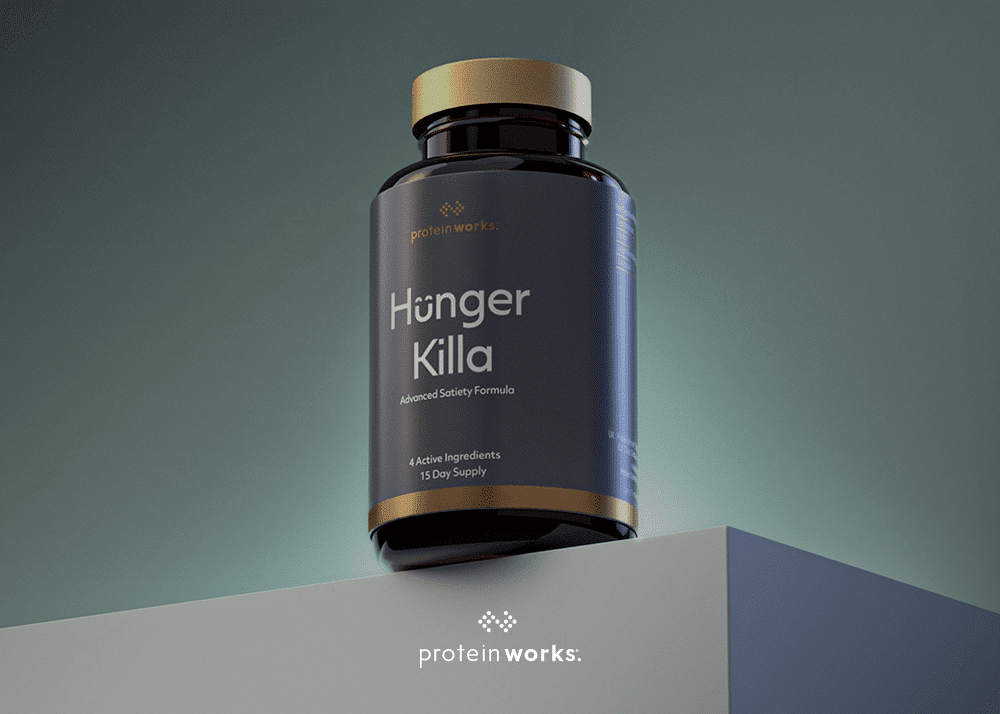
Want a rigorously tested, top-quality appetite suppressant supplement? Our Hunger Killa includes four active ingredients to maintain your blood glucose levels and keep you fuller for longer.
A lot of our community have been asking us about dietary support on GLP-1 medications, so we’ve put together this handy guide on nutritional support for GLP-1 users.
Shop all of our supplements now.
References
Cook, Geoff. “Quieting “Food Noise”: How GLP-1s and Mindfulness Rewire the Default Mode Network (DMN) and Reward Circuits.” Cureus vol. 18,1 e100818. 5 Jan. 2026.
Glucomannan — Is It an Effective Weight Loss Supplement? | Healthline
1.6 million UK adults used weight loss drugs in past year | UCL News
Schubert MM, Irwin C, Seay RF, Clarke HE, Allegro D, Desbrow B. “Caffeine, coffee, and appetite control: a review.” Int J Food Sci Nutr. 2017 Dec.